Industry & innovation insights
How to verify heat resistance and sealing in food-service products
Published:2026-02-24
Updated: 2026-10-08
Use actual temperature, container geometry, contact duration and processing conditions to assess lids, containers and tableware.
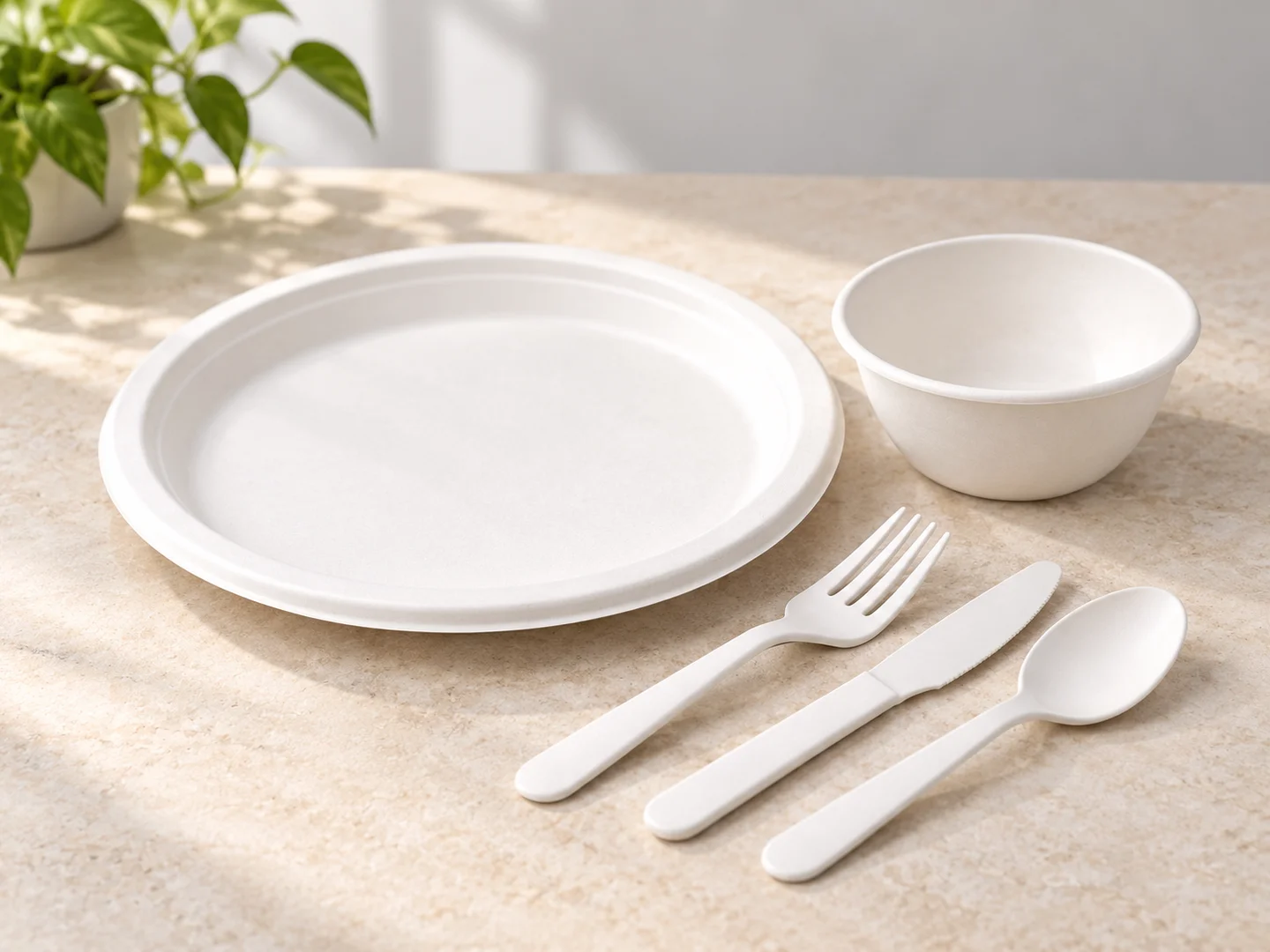
Hot-drink lids and food containers depend on both material and geometry. A stated heat-resistance temperature does not establish leak-free performance during transport, compression or prolonged contact, and does not replace food-contact testing.
Sample for the intended use
- Define food or drink temperature, contact time and fat content.
- Check rim dimensions, sealing features, tolerances and engagement.
- Review forming, storage, stacking and transport conditions.
- Test finished samples for deformation, sealing, opening and contact requirements.
Turn material data into product acceptance criteria
Green Free Plast can support PFM formulation, forming conditions and sample assessment. Information about 95°C heat resistance needs a specific grade, product geometry and test conditions. It should not be extended to every food-service product.
Agree on methods, temperature, duration and acceptance criteria after sampling and before trials. Existing equipment also needs assessment against the processing window; compatibility without adjustment should not be promised in advance.
Start evaluating your material solution
Tell us your product, converting conditions, and target market. We will match materials, samples, and technical support.